
“You can't think your way into a new way of being.
You rehearse your way into one.”
The Mirari Method.
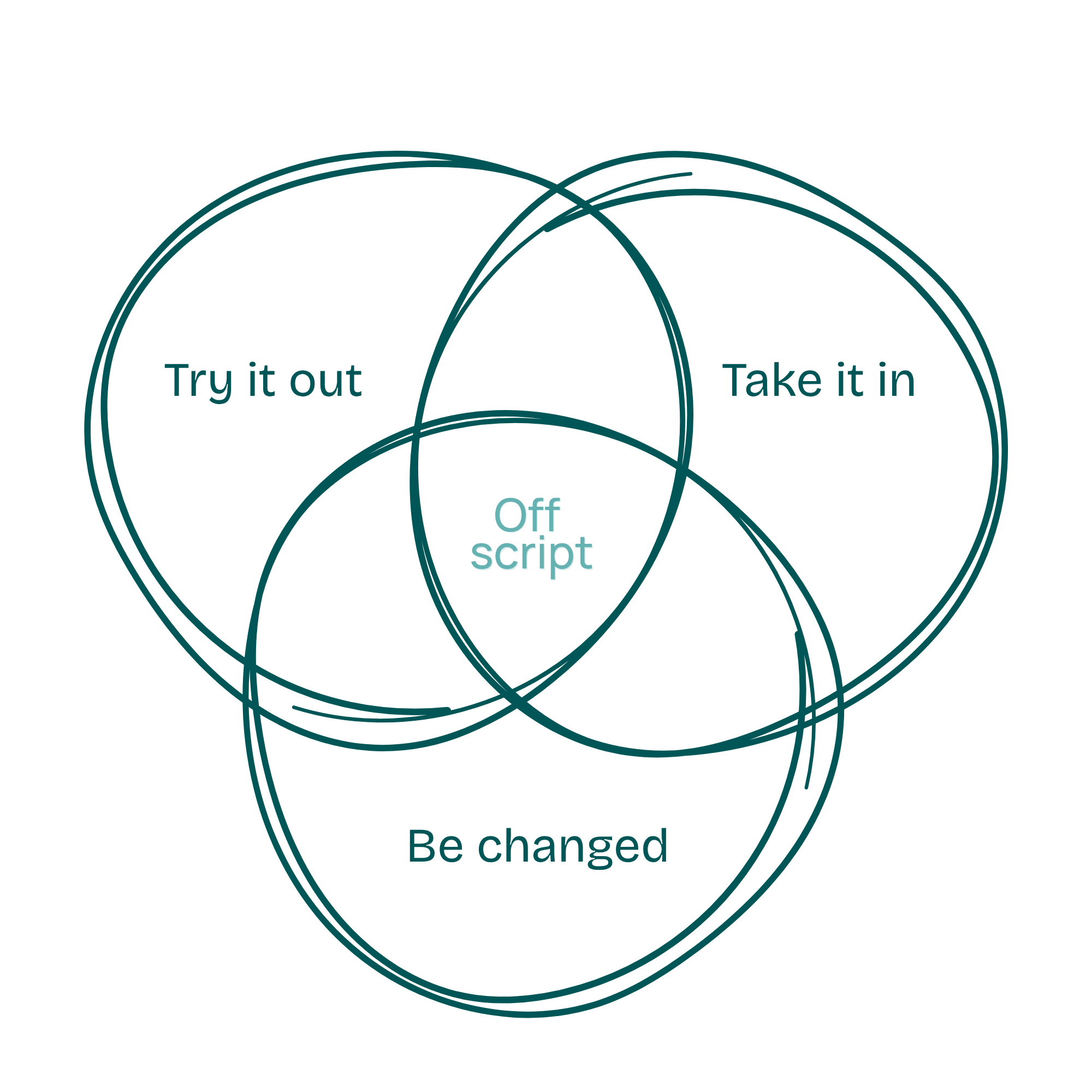
You can't think your way into a new version of yourself — the mind you'd use to reason your way out is the same one that's stuck. You can only experience your way into one. Here, we created a way for you to make sense of that new experience.
Try it out.
Coaching at Studio Mirari is a lived experience. That means we don't just talk about the change you want but we start by embodying it. Come to be more confident, to communicate better, to decide faster, and from the first moments we'll have you be that person — so you feel the thing you came for directly, in your body.
Take it in.
Then we pause: what just happened? What made it possible — and what was still in the way? And what does this say about the version of yourself who couldn't or wouldn’t, five minutes ago? This is how we start integrating a lived experience. And integration leads to a learning that sticks.
Be changed.
Do it again. And again. Work through the resistance, gather the evidence, and the new way stops feeling foreign. What was strange becomes familiar; what you'd been guarding against gets welcomed in — because we made it safe to. This is what growth is: becoming more of yourself.
Why this works.
You need evidence, not encouragement.
You can't reason your way into acting differently — the mind that built the pattern won't dismantle it. What shifts a person is proof: an experience of yourself doing the thing you'd decided you couldn't. That felt moment becomes the evidence your head can't argue with — another way is possible, because I just lived it.
Insight tells you to change.
Experience shows you that you already have.
Play lowers the defences.
Change asks three things at once: the courage to sit in uncertainty, the room to hold two truths without forcing one to win, and enough safety to be seen before you've got it figured out. In short — to stay in the discomfort long enough for the old to give way to the new.
But your mind wants out of that discomfort every time. Play is how we get around it and improv is essentially that. When the guards drop, discomfort stops being a threat and becomes fertile ground. Challenge and safety together allow for growth.
What happens in the room.
Whatever the format, the essence is the same.
We start by arriving — setting the atmosphere, naming what this session is for, or picking up where we left off. Then we move into the work: we cycle through the three movements, trying things out and making sense of them, again and again. Along the way I'm watching for two things: where the resistance shows up, and where something clicks — because those are the live edges. That's where we slow down, stay a beat longer than is comfortable, and push for new meaning to form.
You'll be doing, not just talking. And you'll leave having felt the shift, not just heard about it.